A pile foundation for a building is like a root system for a tree. If these “roots” are not secure, the entire structure is at risk. Therefore, geotechnical studies of pile foundations are extremely important: they make it possible to check whether the piles will withstand the design loads and provide the necessary stability. An experienced geotechnical engineer knows that quality testing of piles and subgrades is key to the reliability and safety of a project.
When planning geotechnical studies of pile foundations, be sure to take into account seasonality and groundwater levels. This is critical to obtain reliable test results.
Main stages of geotechnical research of a pile foundation
As a rule, studies of pile foundations are carried out in several stages, each of which solves its own problem. Below are the main stages and methods that are used in geotechnical surveys for pile foundations.
Preliminary research
At the first stage, maximum information about the site and soil conditions is collected without carrying out large-scale work. This includes:
- Analysis of archival materials: Geological reports for the area, results of past surveys, data on soils and groundwater are studied.
- Site reconnaissance: Visiting the area to visually assess the terrain, the presence of ravines, swamps, and potentially problem areas.
- Research program planning: The required amount of work is determined - how many wells to drill, how many piles to test.
Field testing of soils and piles
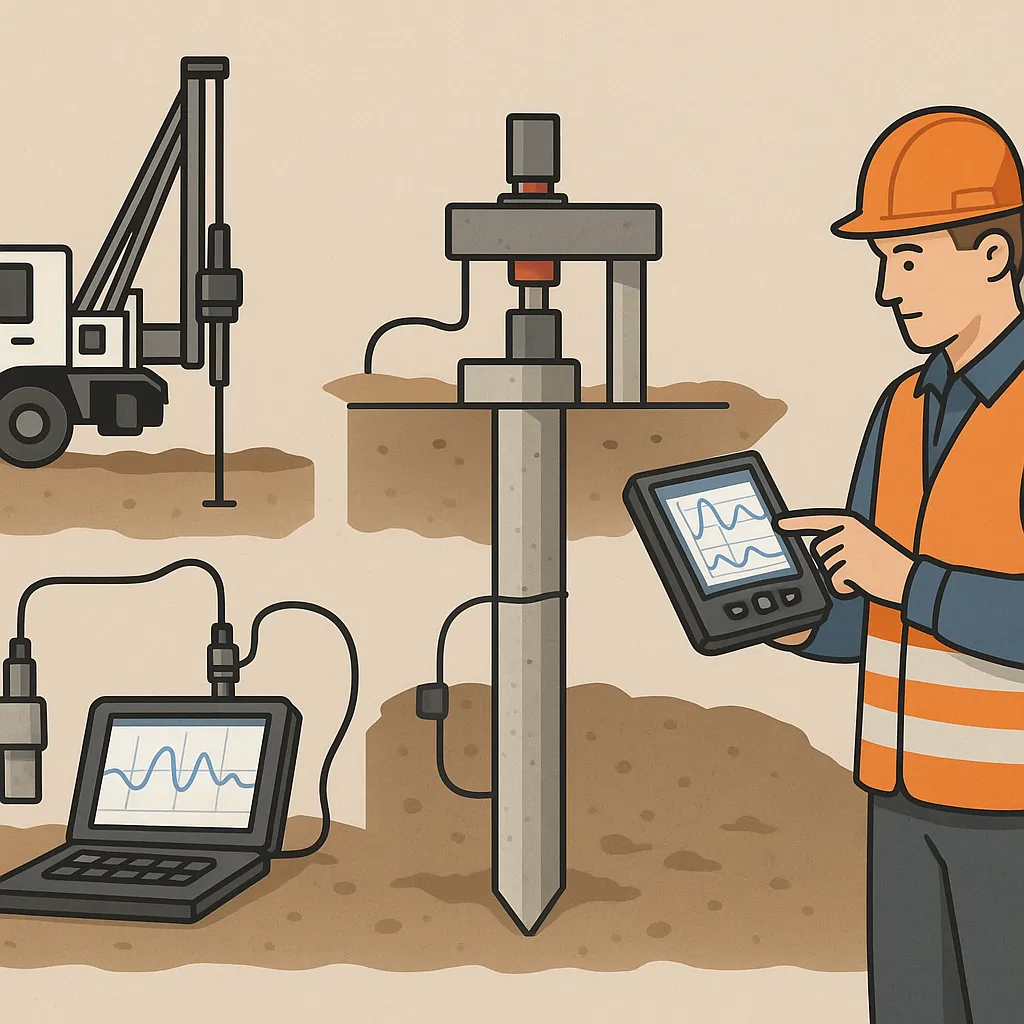
Field testing is the heart of geotechnical research on pile foundations. They are carried out directly on the site in order to understand the properties of the soil “in situ” and test the piles under load.
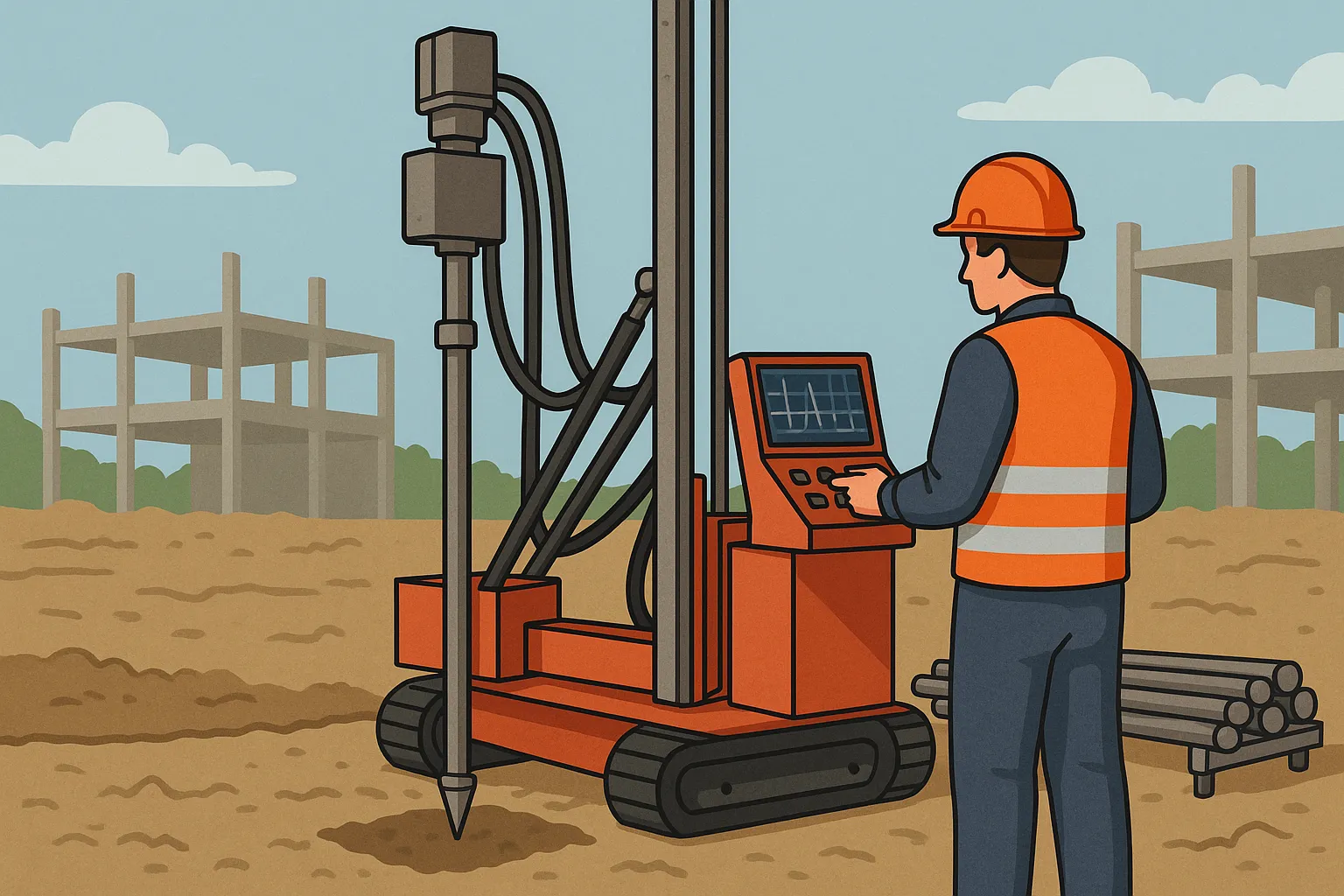
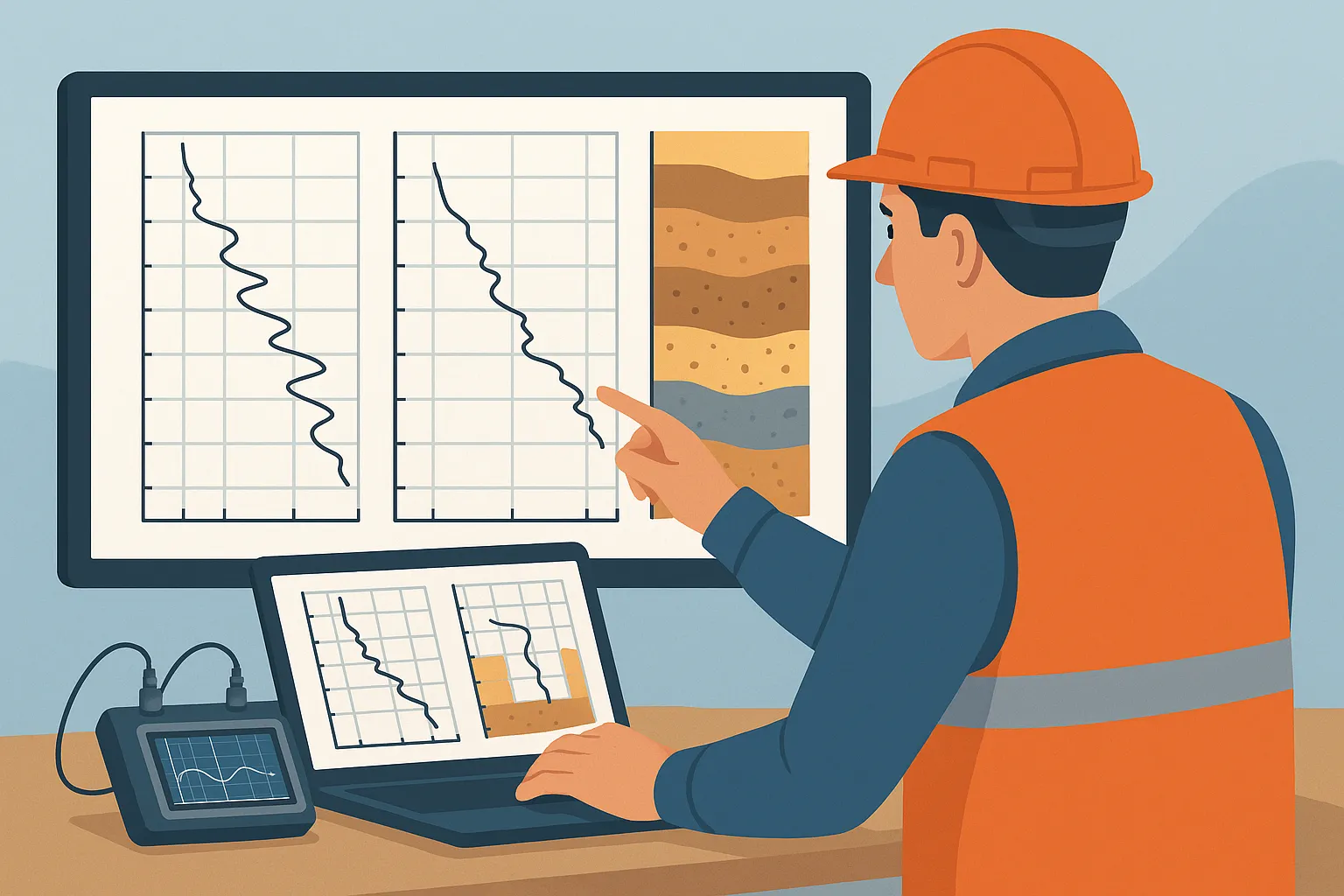
Static Cone Penetration Test (CPT) – one of the most informative research methods. A cone probe is smoothly pressed into the ground, while the soil resistance is continuously measured.
It is important to remember that static sounding should be carried out to a depth of 5 m greater than the design length of the pile according to SP 24.13330.2021. This ensures that possible weak soils are taken into account.
Comparative characteristics of sensing methods
Various soil probing methods have their own areas of application. The summary table compares the main indicators:
| Method | Depth, m | Speed, m/h | Accuracy | Estimated cost per 1 m |
|---|---|---|---|---|
| Dynamic Sensing (DPT) | 15–25 | 15–25 | Average | 450–650 rub. |
| Standard SPT | 20–30 | ~20 | Average | 650–900 rub. (equivalent) |
| Helical probing | 5–15 | 10–15 | Low | 350–500 rub. |
Formulas for calculating soil parameters using CPT
When processing static sounding data, the following correlation dependencies are used:
Angle of internal friction of sandy soils (according to Robertson): φ = 17,6° + 11,0 × log(q_c)
Soil deformation modulus: E = α_E × q_c
Where:
- φ - angle of internal friction, degrees
- q_c - resistance on the cone, MPa
- E - deformation modulus, MPa
- α_E - correlation coefficient (5-10 for sands, 3-8 for clays)
Load testing of pile foundations
After studying the soil, the key moment comes - pile testing. Here it is checked what load the piles can actually withstand in given soil conditions, and how they will deform (settle).
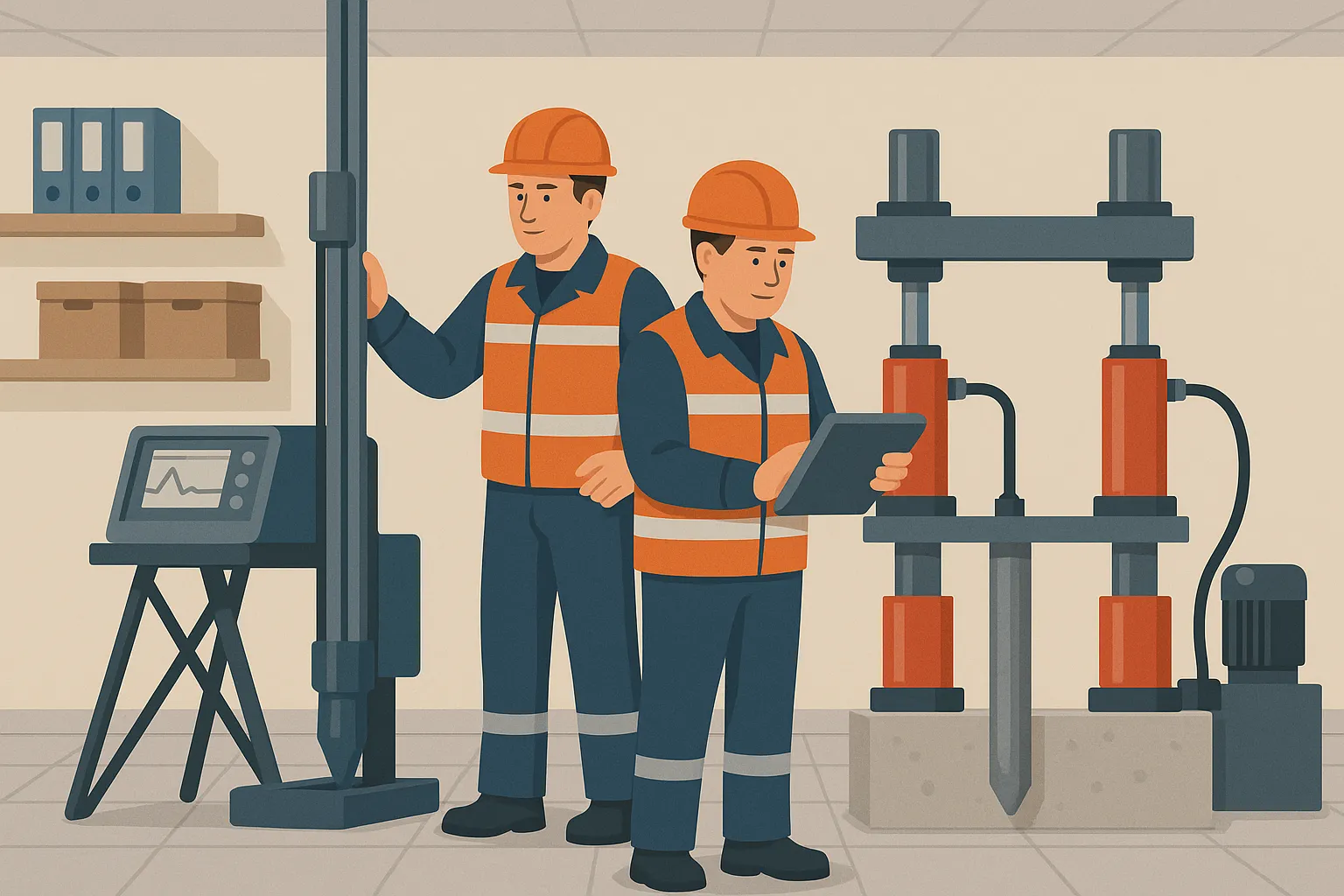
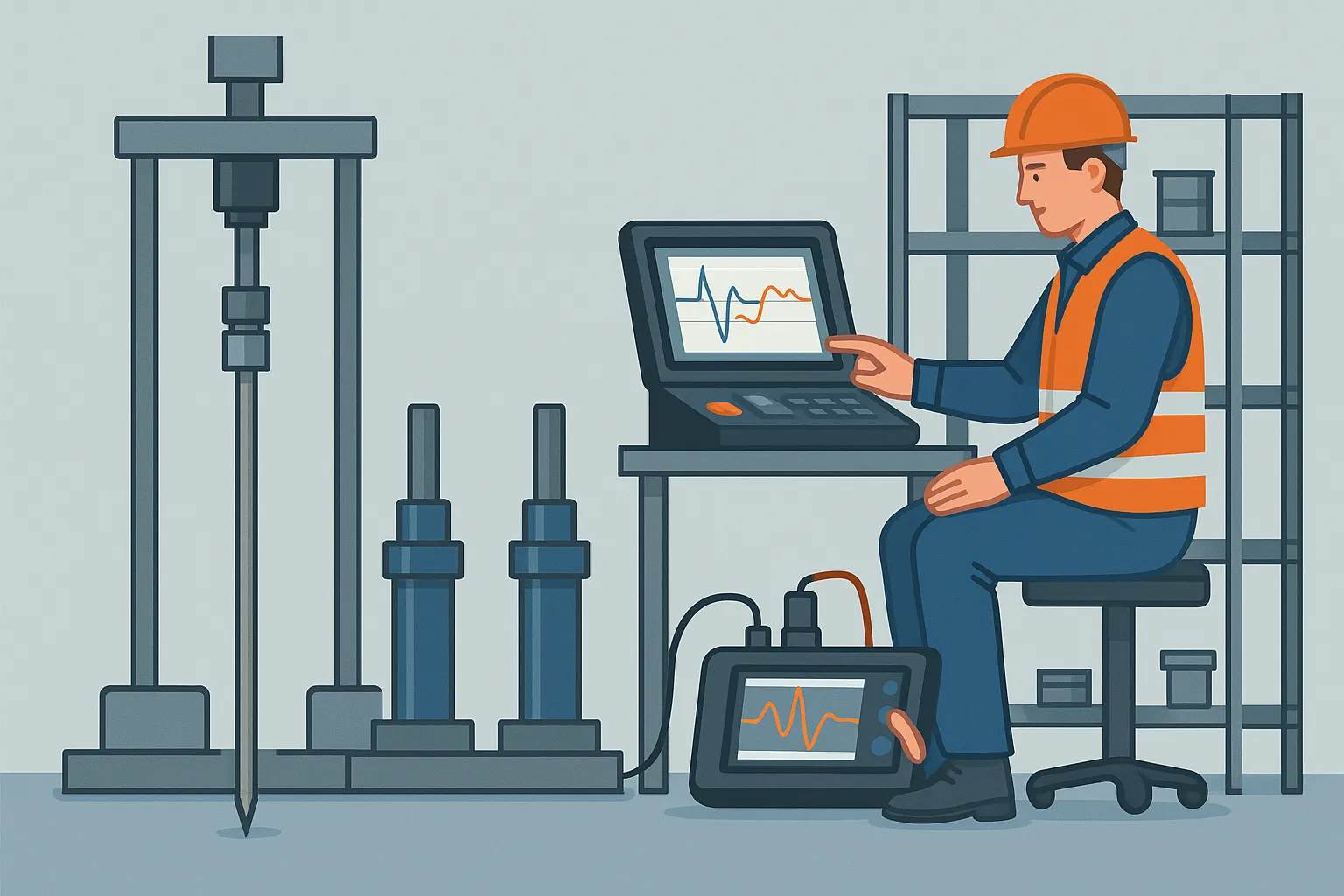
Static pile test is the classic and most reliable way to determine bearing capacity of the pile on the ground. The pile is loaded with a gradually increasing constant load (pressure) and its settlement is measured.
Dynamic testing of piles are carried out using the impact method: a strong blow is applied to the pile (as when driving with a hammer) and its parameters are determined by the response of the pile.
When dynamic testing piles, it is important to take into account the time of soil consolidation: on clay soils - no earlier than 7 days, on sandy soils - no earlier than 3 days after driving.
Modern equipment for research of piles and soils
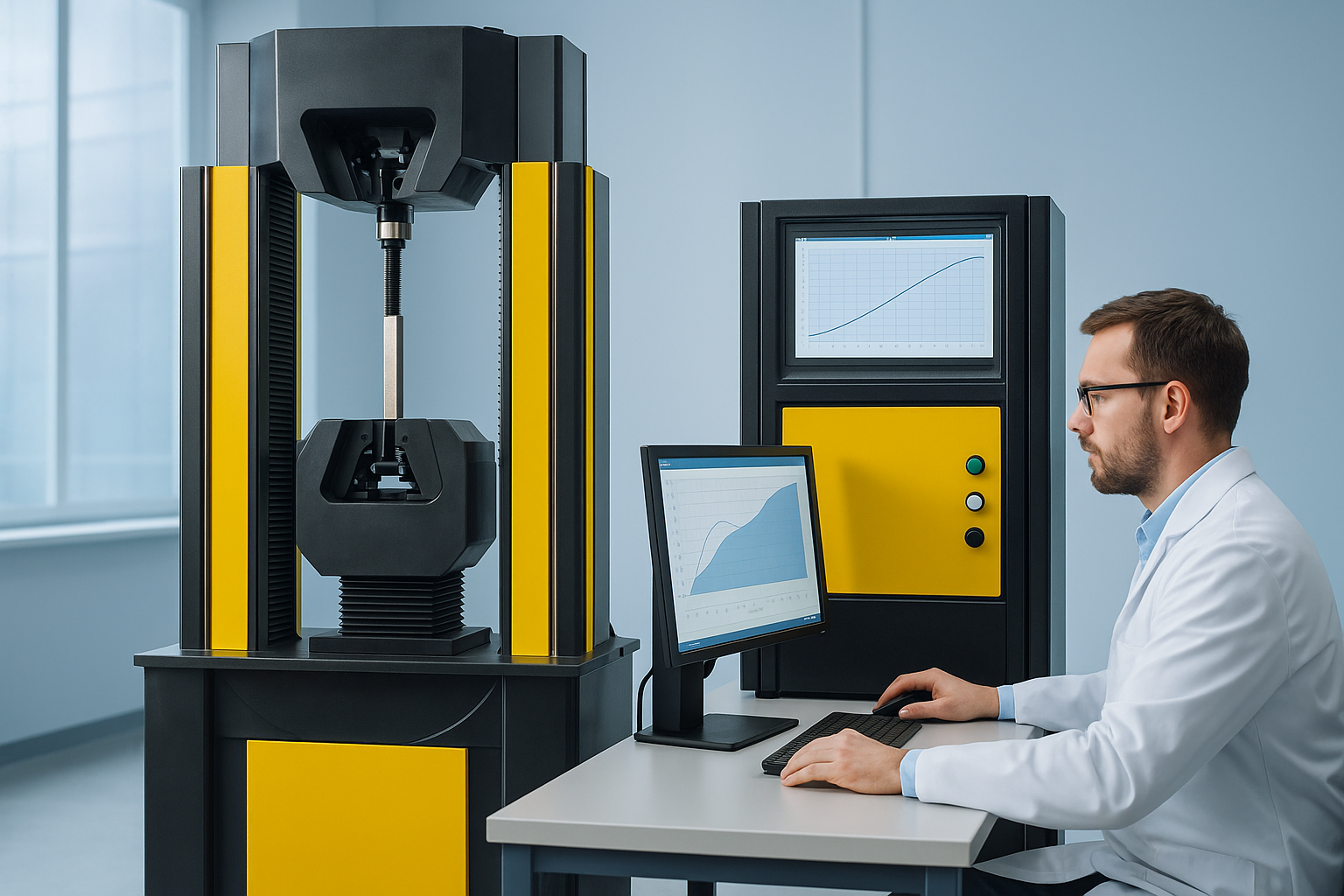
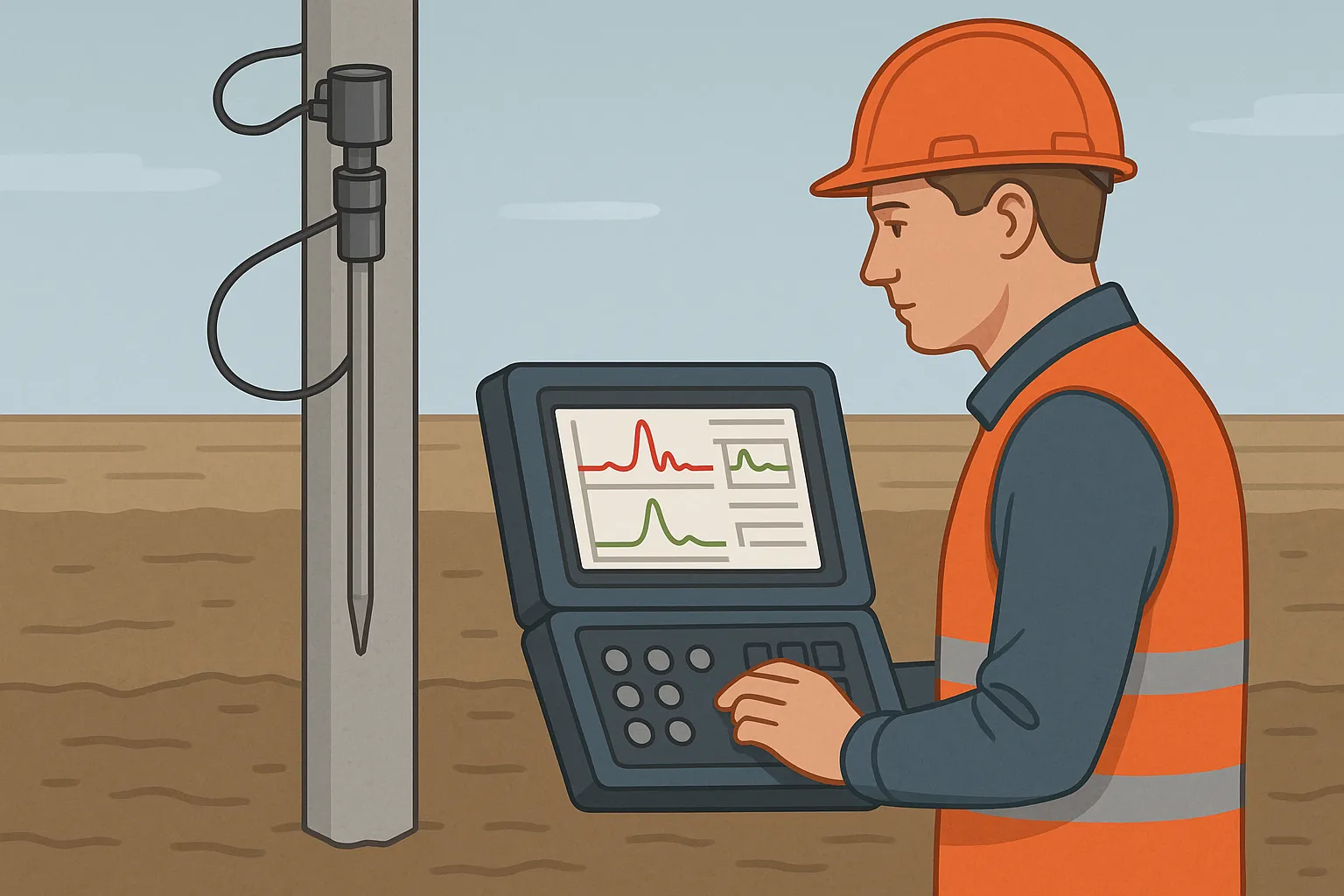
The success of a geotechnical survey largely depends on the equipment used. Modern instruments and installations make it possible to obtain data with high accuracy, automate the testing process and increase safety.
Modern CPT complexes and PDA analyzers allow you to obtain test results in real time. This significantly speeds up the decision-making process on the construction site.
Processing and analysis of test results
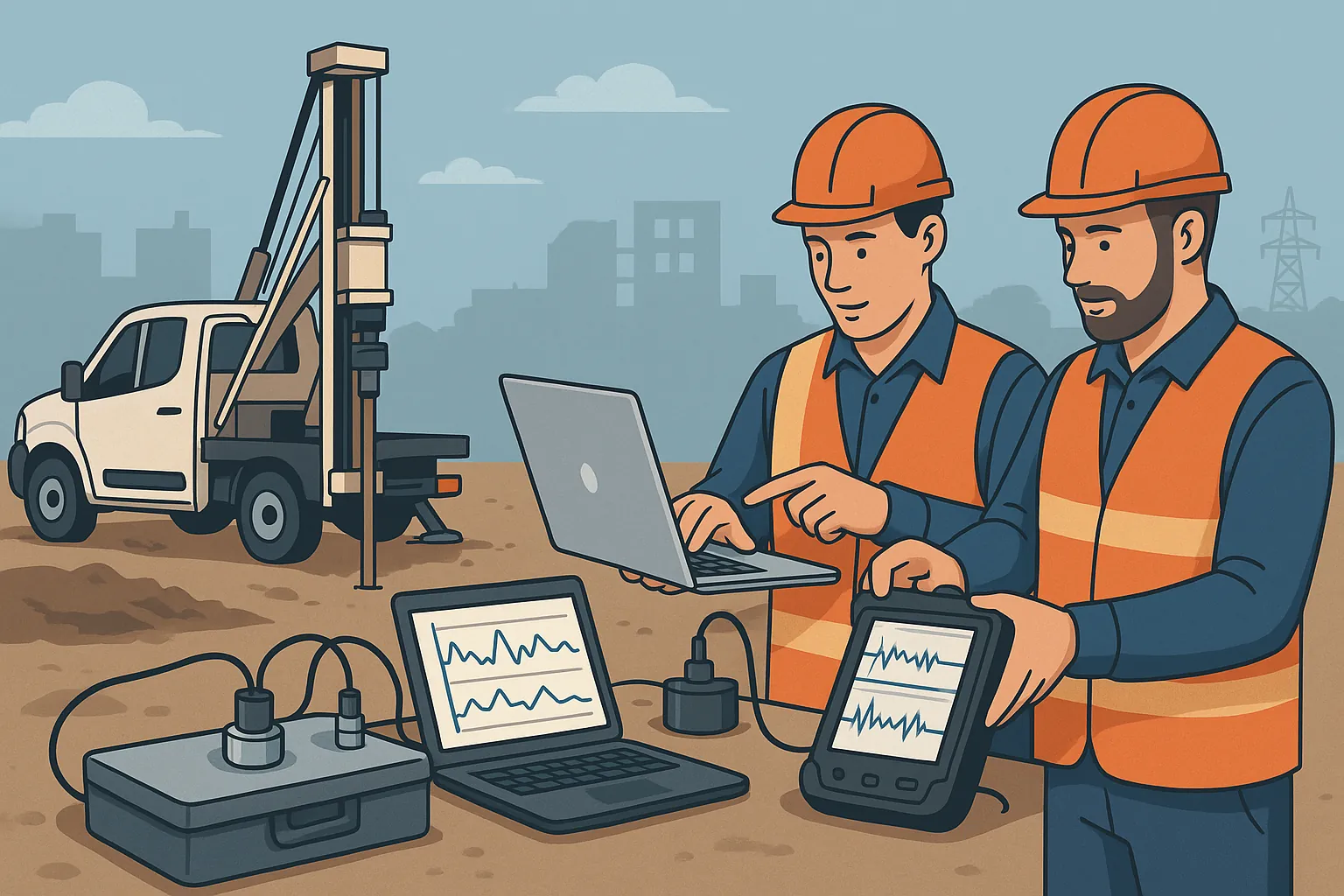
Collecting data is half the battle. It is equally important to properly process the results, understand what they mean for the project, and draw up conclusions.
Correlation formulas for determining soil parameters from CPT data (for example, angle of internal friction φ) give approximate results. For accurate calculations, it is recommended to carry out laboratory tests of samples.
Requirements of regulatory documents for testing piles
Work on the study of pile foundations must comply with established standards. In Russia, the main documents are SP 24.13330.2021 and specialized GOSTs.
Table of requirements for testing piles by responsibility class
| Responsibility class | Minimum number of static tests | Minimum number of dynamic tests | Depth of research |
|---|---|---|---|
| KS-2 (residential buildings, offices) | 3 piles | 10% of the total | 5 m more than the length of the pile |
| KS-3 (industrial facilities, bridges) | 4 piles | 15% of the total | 5 m more than the length of the pile |
| Particularly responsible | By special calculation | By special calculation | 7 m longer than the pile length |
Practical recommendations for qualitative research of piles
Experienced specialists have developed a number of rules to improve the quality of geotechnical surveys of pile foundations and avoid common mistakes.
Remember: savings on geotechnical surveys often lead to cost overruns in construction. It's better to do quality research up front than to fix problems later.
Planning a pile field research program
- Adequate amount of work. Savings on surveys often lead to cost overruns in construction. Rule: the more complex the ground conditions, the more frequent the research points.
- Combination of methods. There is no one universal method that provides all the information. That's why an integrated approach is the best choice.
- Consideration of seasonality and groundwater. When conducting tests, consider the groundwater level and season.
Test quality control
- Equipment calibration and testing. Test zero instruments before the start of each test day. Force and pressure sensors must be calibrated.
- Following the test procedure. Strictly follow the GOST/SP program: duration of each step loading, load step, criteria for moving to the next step.
- Documentation and independent records. Record all results in a field journal at the time of observation, without relying on memory.
Conclusion
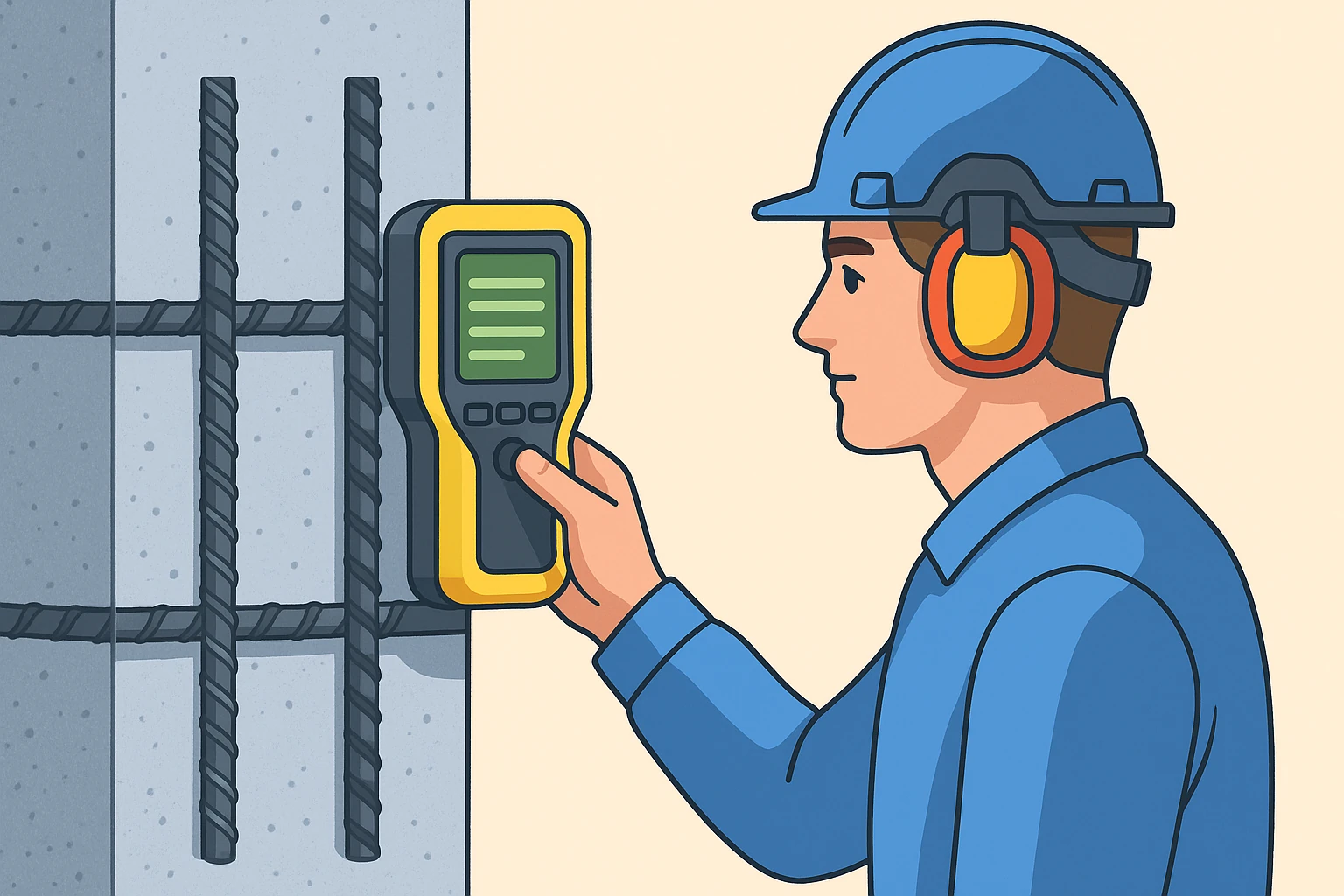
Geotechnical research of pile foundations is a complex but extremely important process that directly affects the safety and cost-effectiveness of construction. Using a combination of various testing methods (static and dynamic soil probing, static and dynamic testing of piles, non-destructive testing), the engineer receives comprehensive presentation about the work of piles in the ground.
The main principle of geotechnical research: an integrated approach using modern methods and equipment ensures the reliability and cost-effectiveness of pile foundations.