Introduction
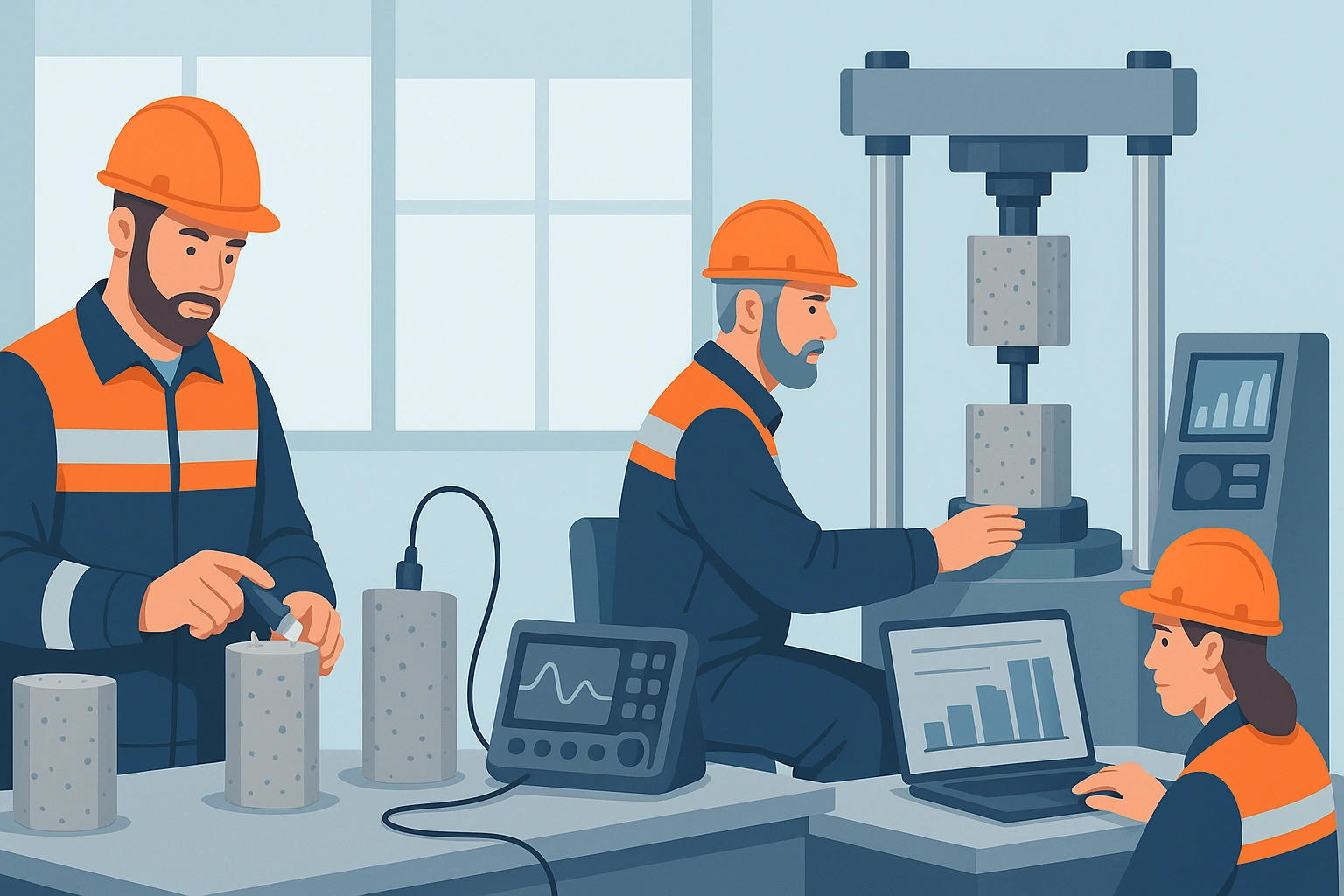
My name is Alexey Ignatiev, I am the chief engineer of the mechanical testing laboratory at Mattest (M-instrument). Over the course of 17 years as a test engineer, I worked my way up from an ordinary specialist to the head of a testing department, where we annually conduct more than 15,000 tests on various materials - from building reinforcement to composite materials for aviation.
I remember an incident in 2018 in one of the regional laboratories: they purchased an expensive bursting machine European production, but did not take into account the specifics of Russian standards and standard sizes of samples. The result is six months of downtime and additional costs for re-equipping the gripping system.
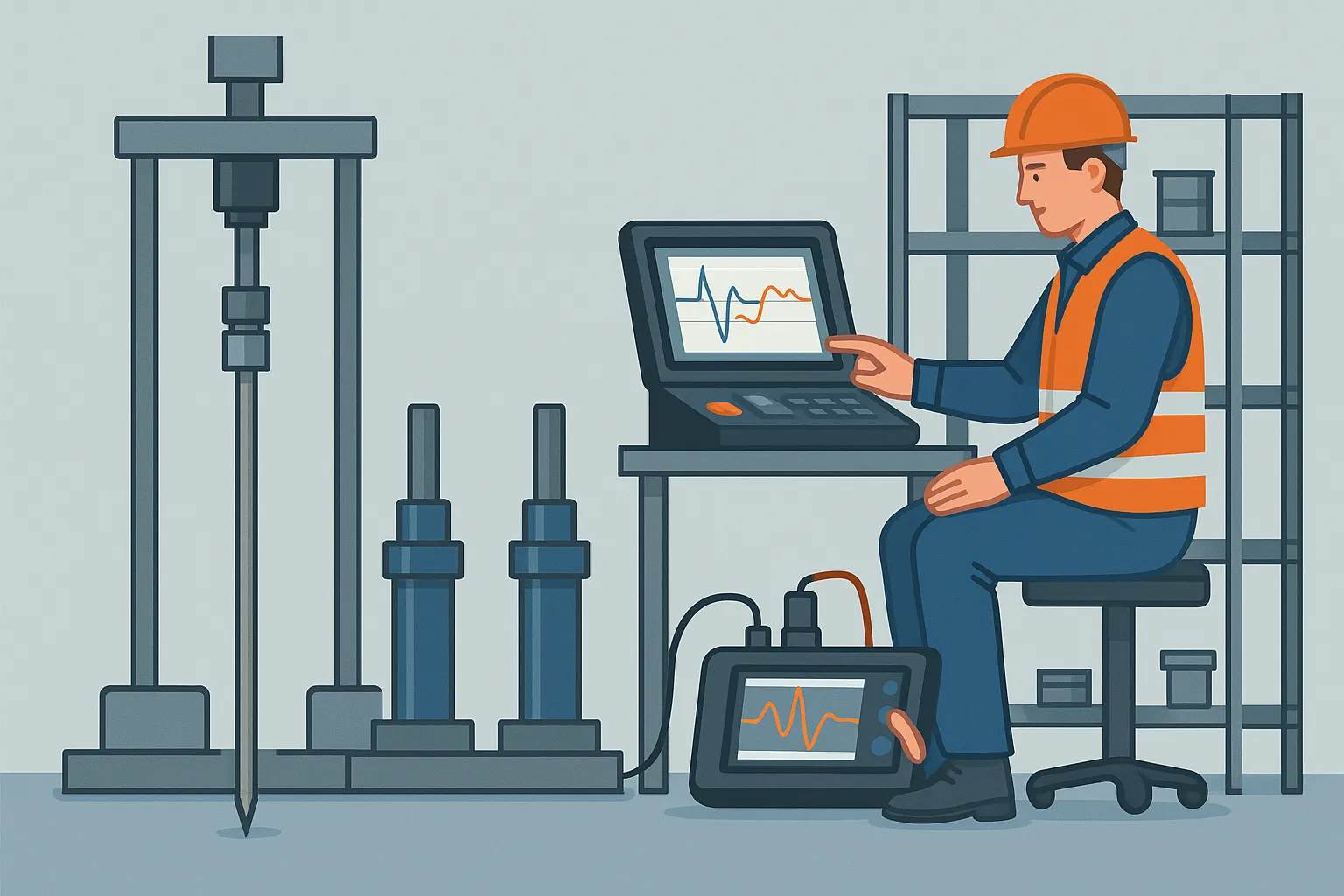
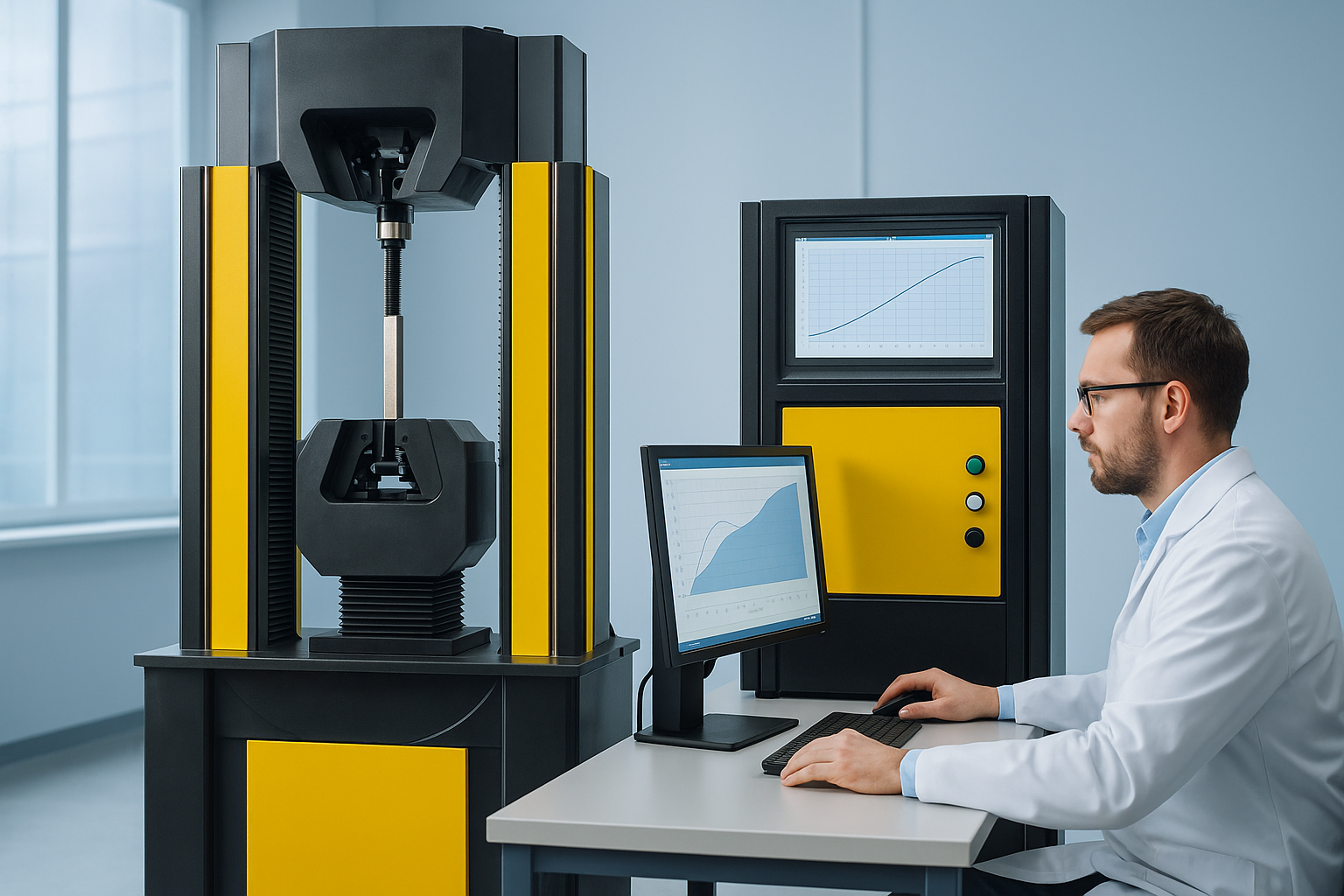
Explosive machine is high-precision measuring equipment for determining the mechanical properties of materials using destructive testing. Unlike non-destructive testing methods, tensile tests provide a complete picture of the behavior of a material under load until failure. Modern installations operate with forces from 5 kN to 5000 kN and provide measurement accuracy in accordance with GOST 1497-84, ISO 6892 and ASTM E8.
Today I will share my practical experience in selecting test equipment, typical mistakes of purchasers and specific recommendations on technical characteristics.
Regulatory framework and standards for mechanical testing
Basic regulatory documents
Tensile testing of materials is subject to strict standards. GOST 1497-84 defines methods for tensile testing of metals at normal temperature. According to clause 4.2 of the standard, the deformation rate should be 0.5-50 mm/min depending on the material.
GOST 11262-2017 regulates testing of plastics. For polymer materials, the test speed is set to 1-500 mm/min. GOST 30435-97 defines a test method for geotextile materials with a loading speed of 20±3 mm/min.
International standards
ISO 6892-1:2019 - international standard for tensile testing of metals at room temperature. The standard requires force measurement accuracy of ±1% for Class 1 equipment.
ASTM E8/E8M defines testing methods for metallic materials. A special feature of the standard is the requirement for uniform deformation along the length of the sample to be no more than 10%.
When choosing a tensile testing machine, be sure to take into account compliance with Russian and international standards. This is critical for laboratory accreditation.
Classification of tensile testing machines and laboratory equipment
Universal testing machines
Universal testing machine is a multifunctional equipment for tensile, compression and bending tests. From the practice of our laboratory: 80% of construction enterprises choose universal installations because of their functionality.
The main advantages of universal machines:
- Possibility of carrying out various types of mechanical tests
- Saving laboratory space
- Unified management and data processing system
- Fast changeover between test types
Specialized tensile testing machines
Tensile testing machines are intended exclusively for tensile testing. They provide higher measurement accuracy due to their specialized design.

Equipment for mechanical testing of metals
Metal tearing machine must provide high forces - from 100 kN to 2000 kN. In 2023, he tested A500C reinforcement with a diameter of 32 mm for a large construction project - a machine with a force of 600 kN was required to correctly destroy the sample.
Features of metal machines:
- Reinforced frame to withstand high loads
- Special grips for round and flat samples
- Elongation measuring system with an accuracy of ±0.01 mm
- Temperature compensation readings
Equipment for polymers
Tensile testing machine for polymer materials works with less force (up to 50 kN), but requires high measurement sensitivity. Polymers have a nonlinear strain diagram, which requires a special approach to data processing.
Servohydraulic systems
Servo-hydraulic testing machine ensures maximum load stability thanks to a closed control system. In our laboratory, such machines are used for high-precision testing of aviation materials.
Types of testing on tensile testing machines
Tensile testing of metals
Tensile testing of metals - the main method for determining strength characteristics. When testing a steel sample, the following is determined:
- Proportionality limit σ_p
- Yield strength σ_t
- Temporary resistance σ_v
- Elongation δ = (l_k - l_0)/l_0 \times 100\%
The design voltage is determined by the formula:
$σ = F/S_0$
where F is the applied force, N; S_0 - initial cross-sectional area, mm²
According to GOST 1497-84, for steel 20 with a sample thickness of 10 mm, the test speed is 10-15 mm/min. When testing a tensile sample, the basic mechanical characteristics of the material.
Polymer testing method
Polymer testing carried out at speeds of 1-500 mm/min depending on the type of material. For rubber mixtures according to GOST 270-84, the speed is 500±50 mm/min.
Features of polymer testing:
- Pre-conditioning of samples at 23±2°C
- Using special grips to prevent slipping
- Test temperature control ±1°C
Bending tests
Bending tests metal tests are carried out to assess the ductility of the material. According to GOST 14019-2003, bend test performed on samples of rectangular cross-section at a punch speed of 5-25 mm/min.

Technical characteristics of tensile testing machines
Load parameters
Maximum load is a key parameter in equipment selection. For most building materials, machines with force are sufficient:
| Diameter of fittings, mm | Required force, kN | Recommended machine |
|---|---|---|
| 14-20 | 100-300 | MIT RM-A300 |
| 22-32 | 300-600 | MIT RM-A600 |
| 36-40 | 600-1000 | MIT RM-A1000 |
Never select a machine “back to back” based on load. The margin must be at least 20% of the calculated fracture force.
Control systems
Modern testing machines equipped with microcomputer control. Microcomputer controlled testing machine provides:
- Automatic maintenance of the specified test speed
- Registration of the load-elongation diagram
- Calculation of mechanical characteristics using specified algorithms
- Formation of a test report
Measuring equipment
The force measurement accuracy must correspond to class 0.5 or 1 according to GOST 28840-90. Servo-hydraulic testing machine ensures load stability ±0.5% of the set value.
The strain measurement system includes:
- Extensometer accuracy class 0.5
- Traverse movement sensor
- Temperature compensation system
Criteria for selecting a tensile testing machine
Defining Laboratory Objectives
Before choosing equipment, clearly define the range of tasks to be solved. An analysis of 50 laboratories showed: 60% choose excessively expensive equipment due to inaccurate technical specifications.
Key questions for analysis:
- What materials will be tested?
- Required load range
- Required measurement accuracy
- Planned performance
Calculation of required load for mechanical tests
To calculate the maximum force, use the formula:
$F = σ_v \times S$
Where:
- F—design fracture force, N
- σ_v — temporary resistance of the material, MPa
- S—cross-sectional area of the sample, mm²
For A500C fittings with a diameter of 25 mm: $F = 500 \times π \times 12.5^2 = 245 \text{ kN}$

Types of materials tested
Machine for testing materials for tensile compression and bending must comply with the specifics of the materials:
Metals: require high forces, special grips, temperature control Polymers: Need precise speed control, prevent slippage Composites: require special methods for securing samples
Budget restrictions
Cost of breaking machine varies from 650,000 to 5,000,000 rubles. If you're on a budget, consider purchasing a base model with upgrade options. Breaking machine price in Kazan may differ from Moscow offers by 5-10% upward due to logistics costs.
Economically sound approach:
- Determine the minimum required functionality
- Build in the possibility of expansion
- Consider maintenance and calibration costs
Practical application of tensile testing machines
Industrial materials testing
In industry, tensile testing machines are used for incoming inspection of materials. The metallurgical plant in Magnitogorsk uses universal tensile testing machine MIT RM-A series for quality control of rolled products.
Universal testing machine MIT RM-A series provides class 1 measurement accuracy when testing metal products, fittings and wire. Cost of universal testing machine MIT RM-A 1000 is about 1,000,000 rubles, which makes it the optimal choice for most laboratories.
Quality control in construction
Construction laboratories use testing machines to control reinforcement, metal structures, and geosynthetic materials. Tensile testing of reinforcement — a mandatory procedure when accepting materials at the site.
A typical control program includes:
- Testing of fittings for each batch
- Control tests of welded joints
- Checking the mechanical properties of metal structures
Scientific research
Research institutes apply high precision testing machines to study new materials. PRO Series Universal Testing Machine with an accuracy of class 0.5, suitable for scientific research on composite materials.
Case: calibration error and its consequences
In 2022, one of the regional laboratories discovered a systematic overestimation of reinforcement strength readings by 8%. During the investigation, it turned out that the calibration of the force measuring sensor was carried out in violation of the methodology - the temperature correction was not taken into account. Retesting 200 batches of fittings cost the customer 1.5 million rubles. Lesson: Follow calibration procedures strictly and keep a metrology log.
Selection and purchase of test equipment
How to choose a tensile testing machine
When choosing equipment, follow the following algorithm:
- Needs Analysis: Define test types and materials
- Calculation of parameters: maximum load, speed, accuracy
- Comparison of offers: technical characteristics, price, service
- Supplier selection: reputation, guarantees, technical support
Pricing factors
Breaking machine price depends on:
- Maximum load (main factor)
- Measurement accuracy (class 0.5 is 15-25% more expensive than class 1)
- Control systems (microcomputer control +20-30%)
- Grip kits (+10-15% for extended kit)

Additional options
Useful options to expand functionality:
- Extensometer for precise strain measurement
- Climate chamber for testing at various temperatures
- Additional grippers for specific samples
- Video recording system of the testing process
For testing polymer materials I recommend rubber and geotextile testing machine, which complies with GOST 270-84 and provides accurate results for elastomers.
Modern technologies in testing equipment
Process automation
Automated Testing Machine provides:
- Automatic sample installation
- Programmable loading cycles
- Automatic detection of the moment of destruction
- Generation of reports without operator participation
Software
Modern testing machines are equipped with specialized software:
- Material databases with preset parameters
- Modules for statistical processing of results
- Integration with laboratory information systems
- Remote monitoring of the testing process
Integration with quality management systems
Mechanical testing machines интегрируются с корпоративными системами:
- Automatic transfer of results to databases
- Monitoring compliance with standards
- Test planning and accounting
- Generation of summary reports
Equipment maintenance and calibration
Regular Maintenance
Maintenance includes:
- Daily performance check
- Weekly cleaning and lubrication of mechanisms
- Monthly verification of reading accuracy
- Annual preventive maintenance
Regular maintenance extends the service life of the equipment by 40-60% and ensures the stability of test results.
Calibration and verification
Calibration is carried out at intervals:
- Annually - for equipment of accuracy class 1
- Every 6 months - for equipment of class 0.5
- After repair or adjustment
Typical problems and their solutions
From practice, I highlight the main problems:
Instability of readings: usually associated with worn load cells Grippers jamming: Requires regular lubrication and adjustment Test speed deviation: problems with the hydraulic system
The connection with concrete quality control is discussed in detail in the article Concrete testing: methods for determining strength and how to use them.
I also recommend that you read the materials in the section Material testing for more information on inspection methods.
FAQ
What tests can be carried out on a universal machine?
Universal testing machines allow you to:
- Tensile testing of metals, polymers, composites
- Compression tests of concrete, brick and other building materials
- Bending tests of beams, prisms, plates
- Shear and Shear Tests
What is the cost of a breaking machine?
Cost of breaking machine varies depending on characteristics:
- Basic models (100 kN): from 650,000 rubles
- Middle class machines (300-600 kN): 750,000 - 2,900,000 rubles
- High-precision equipment (1000+ kN): from 3,200,000 rubles
How often is calibration required?
The calibration frequency depends on:
- Equipment accuracy class (0.5 or 1)
- Usage intensity
- Requirements of regulatory documents
The standard frequency is 12 months for most laboratories.
Is it possible to upgrade existing equipment?
Yes, many cars can be upgraded:
- Installation of new control systems
- Adding additional sensors
- Expansion of the grip set
- Integration with modern software
What is the difference between destructive and non-destructive testing?
Destructive testing (testing on tensile testing machines) involves destruction of the sample to obtain a complete picture of the mechanical properties. Non-destructive testing allows you to evaluate properties without damaging the product, but provides limited information.
Glossary
Temporary resistance (σ_v) - the maximum stress that a material can withstand when stretched before breaking
Deformation diagram — graphical representation of stress versus strain
Capture — устройство для закрепления образца в испытательной машине
Calibration — operations to establish the relationship between instrument readings and actual values
Yield strength (σ_t) - the stress at which plastic deformation begins
Экстензометр - a device for accurately measuring sample deformation
Recommended reading
- GOST 1497-84 "Metals. Tensile test methods"
- GOST 28840-90 "Machines for testing materials in tension, compression and bending"
- ISO 6892-1:2019 "Metallic materials — Tensile testing"
- Geller Yu.A. "Materials Science" - a classic textbook on materials testing
- Magazine "Factory laboratory. Diagnostics of materials" - current test methods
Conclusion
The right choice breaking machine is an investment in the quality and competitiveness of the laboratory. In my 17 years of practical work in the field of mechanical testing, I have become convinced that skimping on key equipment characteristics leads to serious problems in the future.
Key recommendations:
- Carefully analyze your laboratory's needs
- Allow a load margin of at least 20%
- Choose trusted suppliers with a developed service network
- Invest in staff training and regular maintenance
Modern testing machines are complex measuring systems that require a professional approach at all stages: from selection to operation. The right investment in equipment pays off in improved measurement accuracy, laboratory productivity, and customer confidence.
When choosing equipment, contact specialists - this will help you avoid costly mistakes and ensure efficient laboratory operation for many years.
Get a free checklist for choosing a tensile testing machine with technical characteristics and calculation formulas. Fill out the form on our website or contact a laboratory expert.